Wave Youth Leadership
Have you ever had a dream come true?
Maybe it was a desire to marry or have children; maybe it was to launch a successful business. Maybe your dream was to write a book or take a trip to a distant country. Maybe your dream was big, maybe it was small, but regardless, you had a dream—and you got to see it come true.

How would you describe that feeling?
How would you explain it to someone else who perhaps hadn’t experienced that same blessing?
I ask, because today, one of my biggest dreams comes true. Today we launch a movement that will impact countless lives all over the world and change the futures of generations to come. Today we unveil a website that invites you to be part of something bigger than yourself. We’ve been working on this for months now and the dream has come true today.
We would like for you to join us on the journey to impact the lives of young people all over the world and maybe right in your local community by becoming a WAVE Ambassador. We would like you to join us on one of the Masterclass sessions to learn more about how you can catch the wave and become a WAVE Ambassador.
Youth engagement and involvement is at the heart of what we do at WAVE Youth Leadership.
Vision (WHY)
We exist to help school districts accelerate the academic achievement of all students, particularly the low performing and underperforming students and to improve students’ values, ethics, and character-driven leadership.
Mission (HOW)
We provide interactive and engaging student development programs to ensure students develop the skills, knowledge, and attitudes needed for effective communication, leadership, and positive social change.
Core Values (WHAT)
- Express Care: Show me that I matter to you
- Challenge Growth: Push me to keep getting better
- Provide Support: Help me complete tasks and complete goals
- Share Power: Treat me with respect and give me a say
- Expand Possibilities: Connect me with people and places that broaden my horizon

Wave Youth Leadership Courses
SEL Bingo
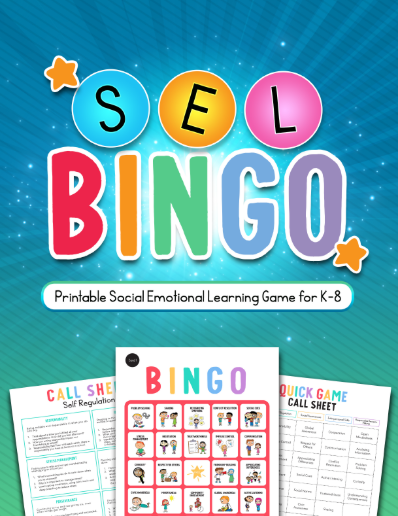
Welcome to SEL Bingo! This resource is designed with the primary goal of integrating Social Emotional Learning (SEL) into the educational journey of children in a way that is both engaging and insightful.
The game focuses on 5 key SEL competencies: Self-Awareness, Self-Regulation, Social Awareness, Interpersonal Skills and Responsible Decision Making.
Within each key competency, we’ll explore a variety of specific skills that can significantly benefit students’ academic and personal lives.
The versatility of this game makes it suitable for various educational contexts:
- Teachers can incorporate it into classroom lessons or use to complement your existing SEL curriculum.
- After school programs can use it as a fun way for students to explore emotions, empathy, and effective communication in relaxed settings.
- Parents may find it a valuable tool for home learning. Play together as a family to help guide rich, student-led conversations and encourage a supportive home vibe.
- School counselors can use it as part of group or individual counseling sessions to facilitate discussions on social and emotional skills.
SEL Bingo is not just a teaching tool, it’s a gateway to understanding and applying essential life skills. No matter what environment you choose to play in, this game offers a dynamic approach to exploring SEL that will engage your students.
Enjoy bringing SEL to life in your educational setting!
Confidence Quest SEL
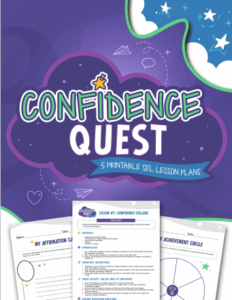
This unit is thoughtfully crafted to guide children aged 6 to 12 through the empowering journey of building confidence. Centered on self-awareness, positive affirmation, and the courage to express oneself, our Confidence Quest lessons are designed to fortify self-esteem, encourage goal-setting, and build core emotional resilience among students. Each lesson is furnished with age-appropriate objectives, materials, a detailed educator guide, worksheets, engaging group activities, and reflective closing discussion questions.
- Lesson 1: Confidence College – We begin our series by inviting students to create a college that represents confidence to them. This visual activity encourages personal reflection on what makes them feel strong and self-assured.
- Lesson 2: Confidence Through Words – In this lesson, students will identify and articulate their strength through words. By focusing on positive attributes and achievements, we aim to reinforce their self-image and early expansion of confidence.
- Lesson 3: Confidence Builders – Building on earlier lessons, students will engage in activities that highlight micro-accomplishments and hidden strengths, reinforcing the building blocks of a confident mindset.
- Lesson 4: Circle of Confidence – This lesson allows students to share confidence-boosting stories and offer encouragement to one another, cultivating empathy and unity among peers while bolstering their own self-esteem.
Confidence Quest concludes with a dynamic role-playing activity that gives students the chance to practice confidence in real-world scenarios. This hands-on approach increases retention, builds courage, and enhances emotional resilience.
Each lesson is aligned with clear, kid-friendly objectives and includes a list of materials tailored for young learners. Alongside the educator guide, this unit includes worksheets, guided discussions, and practical tools to help students internalize confidence as a skill that can be developed—not just a personality trait. Our goal is to help your students not only understand what confidence is, but also be able to practice it, believe in their abilities, and face the world with a boosted and assured spirit.
Happy teaching!
SEL Crossword Puzzles
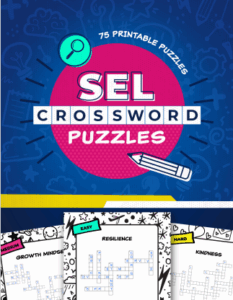
Welcome to SEL Crossword Puzzles! A fun new resource for teachers and parents.
Social Emotional Learning (SEL) teaches kids about emotions, relationships, and understanding themselves and others. Through puzzle activities, we provide a unique and engaging way for students to explore and grasp vital SEL themes.
For each theme, we have created three crossword puzzles of varying difficulty, so you can choose the ones that are most appropriate for your students.
You can use these puzzles as standalone activities, or string them into your broader curriculum. Here’s how to use them:
Classroom Activities
Start the day with a puzzle related to the theme you plan to discuss. It makes the lesson more engaging, brings more receptivity to the day’s lesson.
Homework Assignment
Assign a puzzle as homework, and then in the next class, discuss the words, their meanings, and the significance in the students’ lives.
Working with Small Groups
Practice cooperative learning by having small groups of students work together to solve puzzles. This nurtures teamwork, communication, and problem-solving.
Family Time
Parents can use these puzzles at home with their children. A shared activity like this can build conversation and empathy.
Journaling Prompts
Once a puzzle is completed, hold a class discussion about the theme. Then have students reflect and write about what it means to them.
Art/Illustration Tie-In
Students can choose one puzzle word and draw a picture of what it looks like or feels like. This gives a visual tie-in and connects emotion with cognition.
Using puzzles encourages students to think reflectively, critically, and creatively. As they build vocabulary, puzzle out themes, and explore connections, they shape their emotional intelligence.
SEL Crossword Puzzles are not just about finding the right word to fit a space; it’s about helping kids discover their own ideas. These puzzles can pave the way for meaningful conversation and personal growth.
Let the word searching fun begin!
SEL Cultivating Kindness
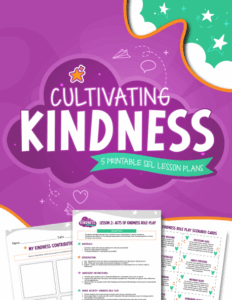
Welcome to our Cultivating Kindness Lesson Plans.
This unit is thoughtfully crafted to steer elementary and middle school kids on an inspiring journey to understand and embody kindness. With an emphasis on the transformational power of kind words and unique individual impact, our lessons are sure to spark a sense of awe for the ongoing lessons in choosing kindness, empathy, and unity, and ignite a passion for contributing positively to the lives of others.
Each lesson is structured with student-ready, age-appropriate objectives, comprehensive materials, a detailed educator guide, interactive worksheet, dynamic group activity, and stimulating closing discussion questions.
- Lesson 1: Recognizing Kindness - Our program begins by teaching students to recognize and define acts of kindness around them, reinforcing the concept that kindness is a value to be observed and celebrated.
- Lesson 2: Acts of Kindness Role-Play - In this hands-on session, students will participate in role-playing exercises that simulate real-life situations, allowing them to practice kindness in a supportive setting and reflect on the meaning and impact of their actions.
- Lesson 3: The Kindness Tree - Students will contribute to a growing “Kindness Tree” wall—representing the accumulation of kind acts in their classroom. This lesson emphasizes how individual contributions of kindness can collectively enhance the community.
- Lesson 4: Creating a Kindness Plan - This collaborative project invites students to express their ideas for promoting kindness at school—creating a collective mural that showcases the diversity and direction of their positive efforts.
- Lesson 5: Kindness Carnival Challenge - The unit culminates with a challenge that allows students to turn acts of kindness into an interactive, gamified celebration of character and daily interaction.
Every lesson includes a clear “I Can…” statement, teacher directions, worksheets, and bonus materials. We hope that as students experience these lessons and share their reflections, they walk away with a better understanding of how powerful kindness can be.
By the end of this unit, our goal is for our young learners to not only understand the concept of kindness but to embody it in their day-to-day lives. As they navigate the academic and social worlds of growing up, we hope they do so with increased emotional resilience, a more positive outlook, and a fortified sense of community.
Happy teaching!
Empathy
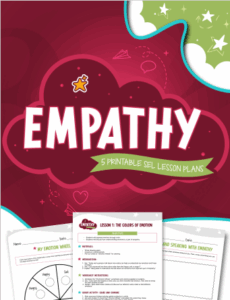
Welcome to our Empathy Lesson Plans: Building Bridges of Understanding!
This unit is thoughtfully crafted to guide children aged 6 to 12 through the transformative journey of developing empathy. Focusing on the ability to understand and share the feelings of others, our five comprehensive lessons explore emotions, encourage active listening, and celebrate both our differences and shared experiences. Each lesson comes with age-appropriate objectives, materials, a detailed educator guide, worksheets, engaging group activities, and reflective closing discussion questions.
Lesson 1: The Colors of Emotion
We start our series with an exploration of emotions. Understanding one’s own feelings is the first step in identifying the emotional world of others. Through interactive activities, students will learn to identify and express various emotions, setting the tone for deeper empathetic connection.
Lesson 2: Empathy in Words
In this lesson, students will identify and articulate their emotions through creative and expressive writing. Activities aim to help them connect with their inner world and express thoughts and feelings with words, essential skills for empathetic interaction.
Lesson 3: Walk in My Shoes
A foundation in understanding others, this lesson focuses on perspective-taking. Students participate in storytelling exercises that teach them to listen to others’ experiences and imagine what life feels like from someone else’s shoes, broadening their compassionate thoughts and actions.
Lesson 4: We're More Alike Than Different
This lesson aims to unify students around the celebration of shared humanity while appreciating our differences.
Lesson 5: The Empathy Circle
A closing circle activity where students reflect on what empathy means to them and how they can apply it in their day-to-day lives. A space for shared learning and support.
Every lesson starts with clear, kid-friendly objectives and includes a list of common classroom materials. The educator guide offers detailed instructions, helps drive discussion, and highlights opportunities for student reflection. Group activities are interactive and hands-on experiences that foster active engagement and empathy-building practices. Each lesson concludes with closing questions that stimulate reflection and help reinforce the key learning outcomes.
By the end of this unit, our goal is for young learners to not only understand empathy but to practice it in their daily lives. As they navigate school and life alongside others, we hope they do so with kindness, understanding, and a deep sense of shared humanity.
Happy teaching!
Executive Functioning Toolkit
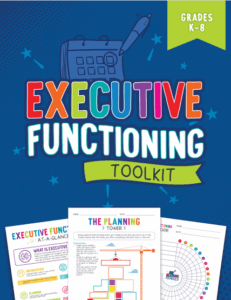
Welcome to our Executive Functioning Toolkit, a handpicked collection of dynamic and engaging activities designed to bolster the core skills of effective self-management in young learners. This resource is structured to support children on their path to becoming organized, focused, and nimble thinkers.
Executive functioning refers to a child’s ability to plan, organize, and complete tasks, as well as regulate their emotions and behaviors appropriately.
Rooted in the principle that executive functioning skills are key to academic and personal success, this compilation is tailored to nurture abilities such as organization, planning, and concentration. Each activity is crafted to provide practice in self-discipline, foresight, and mindful decision-making.
These are more than just activities; they are the building blocks for developing proficient learners and thoughtful individuals. Through these exercises, students will learn to arrange their ideas, anticipate their needs, resist distractions, remember important information, adapt to changes, and maintain attention on their goals.
The resource is broken down into these 6 sections:
WORKSHEETS:
Engaging activities that integrate writing and drawing to solidify concepts of executive functioning in a delightful and interactive manner.
PUZZLES:
Stimulating brain teasers that underline the principles of executive functioning, adding a layer of fun to the learning process.
CHALLENGES:
Invigorating exercises that inspire students to stretch their limits and apply new strategies to everyday tasks.
COLORING SHEETS:
Serene coloring pages that double as a tool for reinforcing focus and task completion.
ANSWER KEY:
Straightforward solutions provided for all puzzles and tasks to facilitate learning and reflection.
COMPLETION CERTIFICATE:
A distinctive certificate to honor the students’ commitment and progress in mastering executive functioning skills.
Gratitude
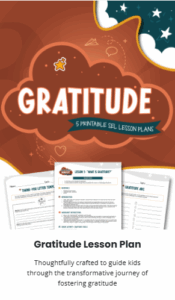
Welcome to our Gratitude Lesson Plans: Cultivating a Thankful Heart!
This unit is thoughtfully designed to guide children aged 5 to 13 through the enriching journey of understanding and practicing gratitude. Focusing on the transformative power of being thankful, our five comprehensive lessons aim to deepen emotional intelligence, enhance well-being, and foster a sense of community. Each lesson comes with age-appropriate objectives, materials, a detailed educator guide, worksheets, engaging group activities, and reflective closing discussion questions.
Lesson 1: “What is Gratitude?”
We begin our series by defining what gratitude is and why it matters. Through interactive exercises, students will explore the different ways to express thankfulness and the impact it has on our lives.
Lesson 2: “Gratitude Jar”
This lesson provides a hands-on approach to practicing gratitude. Students will create their own ‘Gratitude Jars’, which serve as daily reminders to count their blessings.
Lesson 3: “Thank You Letters”
Recognizing the value of expressing gratitude to others, students will compose ‘Thank You’ letters to those who have positively impacted their lives.
Lesson 4: “Gratitude for Everyday Objects”
Often, we take the simplest things for granted. In this lesson, students will learn to appreciate the everyday objects in their lives that contribute to their well-being.
Lesson 5: “Gratitude in Our Community”
Taking gratitude to the individual level, this lesson encourages students to recognize and appreciate the people and places that support their lives.
Every lesson starts with clear, kid-friendly objectives and is followed by a list of materials tailored for young learners. The educator guide offers detailed instructions, helping to drive each lesson forward with consistency and purpose. Group activities are interactive and hands-on experiences that reinforce the concepts through collaboration and reflection. Each lesson concludes with discussion questions to stimulate deeper understanding and application.
By the end of this unit, our goal is for our young learners to not only understand the concept of gratitude but to embody it in their lives. As they navigate the academic and social worlds of growing up, we hope they do so with increased emotional resilience, a more positive outlook, and a fortified sense of community.
Happy teaching!
Growth Mindset
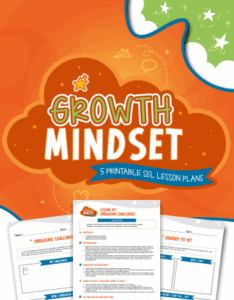
Welcome to our Growth Mindset Lesson Plans: Cultivating a Can-Do Attitude!
This unit is thoughtfully crafted to guide kids through the transformative journey of developing a growth mindset. Focusing on the belief that talents and strengths come via developing through dedication and hard work, our five comprehensive lessons inspire resilience, embrace challenges, and celebrate the process of learning. Here’s what’s included:
Lesson 1: Embracing Challenges
We kick off our series with an exploration of challenges and their potential for personal growth. Through interactive exercises, students will discover that facing difficulties is not just a possibility, but beneficial, as it fuels progress and learning.
Lesson 2: The Power of “Yet”
The simple addition of the word “yet” can make a world of difference. Students will learn the potential of not having something now, but the belief they might know or be able to do something soon, with developed practice.
Lesson 3: The Brain is a Muscle
In this lesson, students will dive into the fascinating world of neuroplasticity, understanding that their intellectual abilities can evolve through hard work and persistence.
Lesson 4: Positive Self-Talk
The power and practice of encouraging inner dialogue is the subject of this lesson. This lesson illustrates how children can develop confidence and strategies to reframe negative thoughts into motivating affirmations.
Lesson 5: Setting SMART Goals
A real-world lesson on goal-setting using the SMART framework, ensuring that objectives are clear, actionable, and attainable within each student’s reach.
Each lesson comes with clear, kid-friendly objectives and is followed by a list of common classroom materials. The educator guide offers detailed directions for each activity, with suggested discussion questions to stimulate reflection and application. Worksheets are included to reinforce the learning, and group activities provide opportunities for cooperative learning and social-emotional development.
By the end of this unit, our goal is for our young learners to not only understand the concept of growth mindset, but to believe in their ability to succeed. As they learn what to do about how they relate to the world around them, they’ll start to embrace learning challenges, how they do so with resilience, positivity, and an unwavering belief in their capabilities.
Happy teaching!
SEL Hidden Message Puzzles
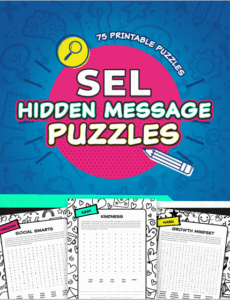
Welcome to SEL Hidden Message Puzzles, a dynamic and engaging series designed to foster social-emotional learning (SEL) in kids of all ages.
This resource offers an extensive range of topics—25 in total—including Goal Setting, Empathy, Mindfulness, and more. Each topic is accompanied by three puzzles, tailored to different levels of difficulty: Easy, Medium, and Hard. This structure allows for gradual progression, challenging students as they grow more confident in their abilities.
The interactive nature of puzzles makes them an excellent tool for enhancing cognitive skills like critical thinking and problem solving, while simultaneously teaching valuable life skills.
As students decode each puzzle, they uncover important messages and lessons about social-emotional health, providing a memorable and impactful learning experience.
At the end of this document you’ll find a complete Answer Key to verify your solutions. You can also use this to give hints to students if they are stuck or need help.
By integrating these worksheets into your educational routine, you provide students with an enjoyable method to enhance their understanding of themselves and how they relate to others.
Our resources are more than just activities; they are gateways to building stronger emotional intelligence and social skills.
Knowing Myself
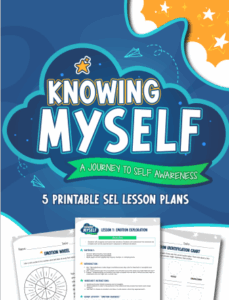
Welcome to Knowing Myself: A Journey to Self Awareness.
This carefully crafted unit includes five step-by-step lesson plans focusing on social and emotional learning.
Each lesson is designed to foster an understanding of personal emotions, strengths, values, beliefs, and the art of emotional intelligence. Students will learn to recognize and appreciate their unique qualities and learn how these attributes can influence their interactions and relationships.
Let’s take a closer look...
Lesson 1: Emotion Exploration
We begin our exploration by delving into the world of emotions. Students will learn to identify, express, and manage their feelings, laying the groundwork for emotional intelligence.
Lesson 2: Discovering My Strengths
Building upon self-awareness, this lesson encourages students to uncover and acknowledge their own strengths. This self-recognition serves as a pillar for self-confidence and growth.
Lesson 3: Values and Beliefs
Delving deeper, students will reflect upon and articulate their personal values and beliefs. This lesson is essential in helping them understand how these principles shape their thoughts and actions.
Lesson 4: Strengths Spotlight
In this self-celebration showcase, students are given the chance to present their strengths on display. This practical exploration highlights the impact of personal abilities in everyday life.
Lesson 5: Emotional Intelligence
Weaving together the concepts of awareness, this final lesson equips students with practical strategies for managing emotions, developing empathy, and enhancing social interactions. Students conclude the lesson with a deeper understanding of how emotions and behaviors are interconnected.
Each lesson is structured with clear, kid-friendly objectives and materials, an educator guide with detailed directions, and supporting worksheets and discussion prompts to reinforce the learning.
As your students engage with this unit, they’ll explore the many aspects of their emotional selves. They’ll learn what makes them unique, how their strengths and values shape their worldview, and how to use this knowledge to navigate the world with confidence and compassion.
They’ll learn that self-awareness is not just about looking inward but about how they relate to the world around them.
This unit offers a transformative journey and walks your students step into mindful, self-aware thinkers. Happy teaching!
Managing My Emotions
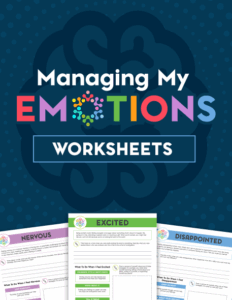
Welcome to the “Managing My Emotions Worksheets,” a comprehensive resource designed to help children understand and navigate their feelings through interactive and reflective activities. This resource is crafted with care to assist educators, counselors, and parents in teaching emotional intelligence skills in a structured yet engaging way.
WHAT’S INCLUDED:
Inside, you’ll find a series of thoughtfully created pages, each dedicated to a specific emotion under six primary emotional categories: Happy, Surprised, Calm, Sad, Angry, and Afraid. Each category is broken down into secondary emotions that children commonly experience.
Each worksheet includes:
- A Description of the Emotion: A brief explanation that helps the child understand what the emotion feels like and when it might occur.
- An Emotion Space: An open prompt encouraging children to recall and write about a personal experience where they felt the specific emotion, facilitating reflection and self-awareness.
- Coping Strategies: A list of four practical, actionable strategies that children can use when they experience these emotions. These strategies are explained in simple, clear language suitable for children.
- Drawing Space: A creative prompt that asks children to illustrate themselves using one of the coping strategies, reinforcing the learning through visual expression.
HOW TO USE THESE WORKSHEETS:
- In the Classroom: Teachers can integrate these worksheets into their regular curriculum to foster emotional development and empathy among students. They can be used during social studies and health education, or as part of a morning circle where students discuss and explore their feelings and coping mechanisms together.
- Counseling Sessions: School counselors can utilize these worksheets during individual or group sessions as a tool to help students articulate their feelings and learn coping skills in a safe and structured environment. They can also be useful tools for behavior intervention plans.
- At Home: Parents can use these worksheets to engage in meaningful conversations with their children about emotions and coping strategies. Completing a worksheet together can be a bonding activity and also build emotional resilience and understanding in children.
These worksheets not only aid in the identification and management of emotions but also encourage the application of life skills such as empathy, problem-solving, and communication. By regularly engaging with these worksheets, children can build a robust emotional vocabulary and toolkit that can significantly improve their ability to handle various situations both inside and outside the classroom.
Social Skills
Welcome to our Social Skills Lesson Plans: Nurturing Connections and Growing Together!
This unit is thoughtfully tailored to teach children aged 6 to 12 vital social skills like embracing individuality, communicating effectively, empathizing, building friendships, and resolving conflicts. With five engaging lesson plans, we strive to equip your young learners with the interpersonal skills necessary to interact positively with classmates, teachers, and the community. Each lesson is attentively structured with age-appropriate objectives, materials, an educator guide, worksheets, interactive activities, and closing discussion questions.
Lesson 1: Embracing Our Differences
We initiate our unit by celebrating what makes each student unique. Through fun and creative activities, children will learn to appreciate and respect the diversity in their classroom, fostering a sense of belonging and unity.
Lesson 2: Communication
Talking and listening are equally important! In this lively lesson, children will explore both verbal and non-verbal communication through games and role-play, learning how to express themselves clearly and listen to others with empathy.
Lesson 3: Empathy
Understanding how others feel is a big part of being a good friend. Children will dive into the world of empathy, discovering how their actions respond to the feelings of their friends, and why empathy is key to positive relationships.
Lesson 4: Friendship Building
Friendships are special bonds that grow with care! In this heartwarming lesson, children will participate in activities to learn the importance of choosing and keeping friends.
Lesson 5: Conflict Resolution
It’s normal to have disagreements, but how we solve them matters. Our final lesson will guide children through strategies to resolve conflicts with kindness and understanding, helping them build stronger peer relationships.
Each lesson plan begins with clear, age-friendly objectives, followed by a list of materials tailored for young learners. Educators will find detailed instructions in the educator guide, along with worksheets and activities to reinforce the lesson. Group exercises and role-playing opportunities offer meaningful opportunities for connection and reflection. Each lesson concludes with reflection questions that stimulate further discussion and personal growth.
As we guide our young students through these lessons, we are planting the seeds for a harmonious classroom environment, where every child is encouraged to be themselves, and positive relationships blossom.
Happy teaching!
Social Emotional Learning
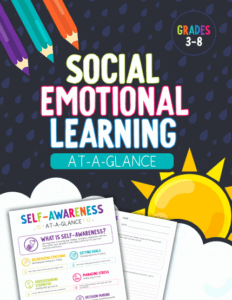
WELCOME to Social Emotional Learning At-a-Glance, a comprehensive resource designed to empower educators, parents, and caregivers in fostering essential social and emotional skills in children of all ages. This resource is not only a guide but also a toolkit for nurturing well-rounded, emotionally intelligent individuals who can navigate the complexities of their emotions, relationships, and decisions with confidence and compassion.
At the heart of this resource are 13 critical Social Emotional Learning (SEL) skills, each meticulously broken down into two parts: an At-a-Glance sheet, and a Discovery Guide.
The At-a-Glance sheets
provide a concise summary of each skill, offering quick insights into its importance and impact. Skills covered include self-awareness, self-esteem, mindfulness, positive thinking, kindness, empathy, character education, social skills, confidence, decision-making, executive functioning, gratitude, and growth mindset.
Complementing these summaries,
the Discovery Guide for each skill delves deeper, featuring engaging exercises and prompts designed to provoke thought and encourage practical application. These guides feature hands-on approaches to learning, enabling kids to explore each skill in depth and understand how to apply them in real-life scenarios.
Educators and parents
can utilize this resource in a multitude of ways. In the classroom, teachers can incorporate the At-a-Glance sheets and Discovery Guides into their lesson plans, using them as a basis for classroom group activities, or individual reflection. At home, parents can use these tools to initiate meaningful conversations with their children, helping to reinforce the skills learned in school and navigate daily challenges.
Social Emotional Learning At-a-Glance is more than just an educational tool; it’s a pathway to a more understanding, compassionate, and emotionally healthy future generation. It offers a practical and accessible way for educators and parents to support the social and emotional development of the children in their care, preparing them not just for academic success, but for life.
Escape Room
Developing relationship skills is an essential part of a child’s social and emotional development. These skills—including communication, cooperation, conflict resolution, empathy, and teamwork—are critical for success in both personal and professional settings.
The Tower of Teamwork Escape Room is designed to help students understand these crucial concepts in a fun, interactive way, fostering these skills in a real-life context.
The game takes players through five stages, each one representing a key relationship skill. Students will navigate their way up the tower by solving puzzles related to each skill.
This provides an opportunity to discuss and reflect on the importance of these skills and how they interrelate, emphasizing their significance in maintaining healthy relationships.
SEL Word Search
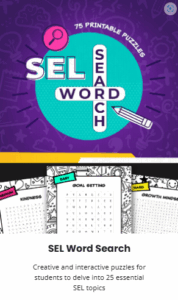
Welcome to SEL Word Searches!
An exciting resource for educators and parents.
Social Emotional Learning (SEL) focuses on understanding emotions, building positive relationships, and fostering self-awareness. Our word searches offer a creative and interactive approach for students to dive into 25 essential SEL topics.
For each topic, we’ve designed three word searches with varying levels of difficulty, ensuring you can select the perfect challenge for your students.
Incorporate these word searches as individual exercises or blend them into your wider teaching program. Here’s how you might use them:
Classroom Activities:
Begin the lesson with a word search tied to your main topic. It acts as a conversation starter, prepping students for the day’s learning.
Homework Assignments:
Set a word search for homework. Then, in the subsequent lesson, discuss the discovered words, delving into their meanings and relevance to the students’ lives.
Group Work:
Facilitate cooperative learning by having small student groups tackle word searches. This nurtures teamwork, communication, and cooperative problem-solving skills.
Discussion Starters:
After completing a word search, initiate a class talk about the core topic. Invite students to share personal anecdotes or stories associated with the words they found.
Family Time:
Parents, these word searches are a wonderful way to bond with your children while discussing pivotal SEL themes in a casual environment at home.
Journaling:
Post-word search, motivate students to write down any arising thoughts or feelings in a journal. Such introspection can amplify their comprehension.
Role-Playing:
For themes that need further exploration, consider a post-discussion, engage students in role-playing activities to apply the concepts practically.
Engaging with these word searches instills reflection in students, not just through identifying words; it builds cognitive processing, fosters self-understanding, and hones vital life competencies. Whether implemented in a classroom or within the family, these word searches can be the catalyst for meaningful discussions and personal evolution.
Let the word search fun begin!